
This webinar is part of our Restoring Our Kelp Forests virtual series brought to you by Seven Capes Bird Alliance in partnership with Friends of Otter Rock, Oregon Shores Conservation Coalition, Oregon Kelp Alliance, and the Elakha Alliance.
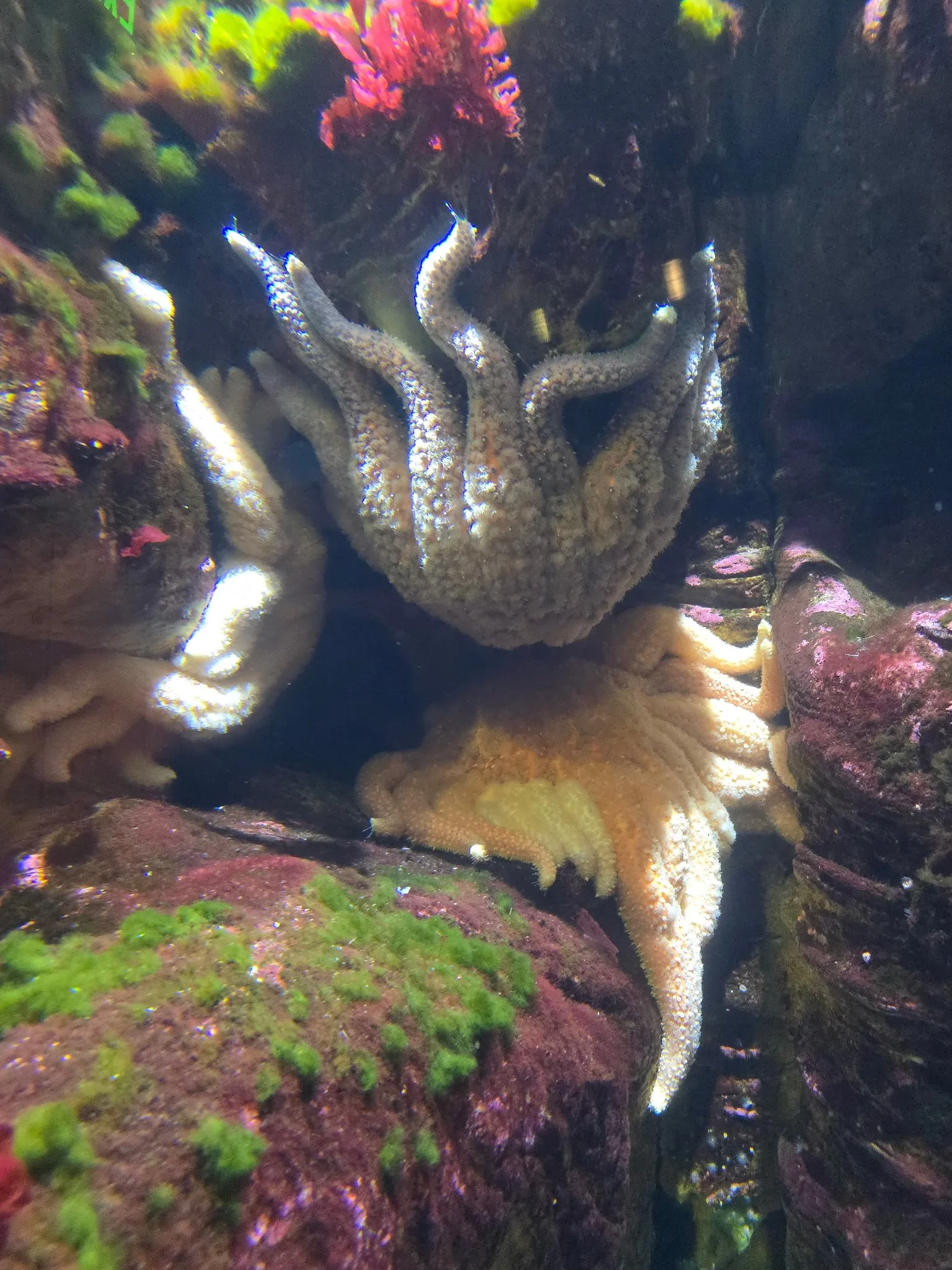
Sunflower sea stars by Ruth Shelly
A large marine epidemic known as sea star wasting disease hit the Oregon coast in 2014. This caused an important sea urchin predator, the sunflower sea star, to decline by more than 98% in population size. This large, fast, up to 28-armed sea star influences urchin populations not only by directly consuming urchins, but also by indirectly affecting their behavior through fear. The loss of this predator is linked to a 70% decline of Oregon’s kelp forests and an increase in urchin populations, creating urchin-dominated barrens. Miles will walk us through his laboratory research, where he quantified how many urchins a sunflower sea star can eat, and his field experiments, where he dove in Oregon’s cold turbulent waters to test the effect of sunflower sea star presence on urchin behavior and grazing.
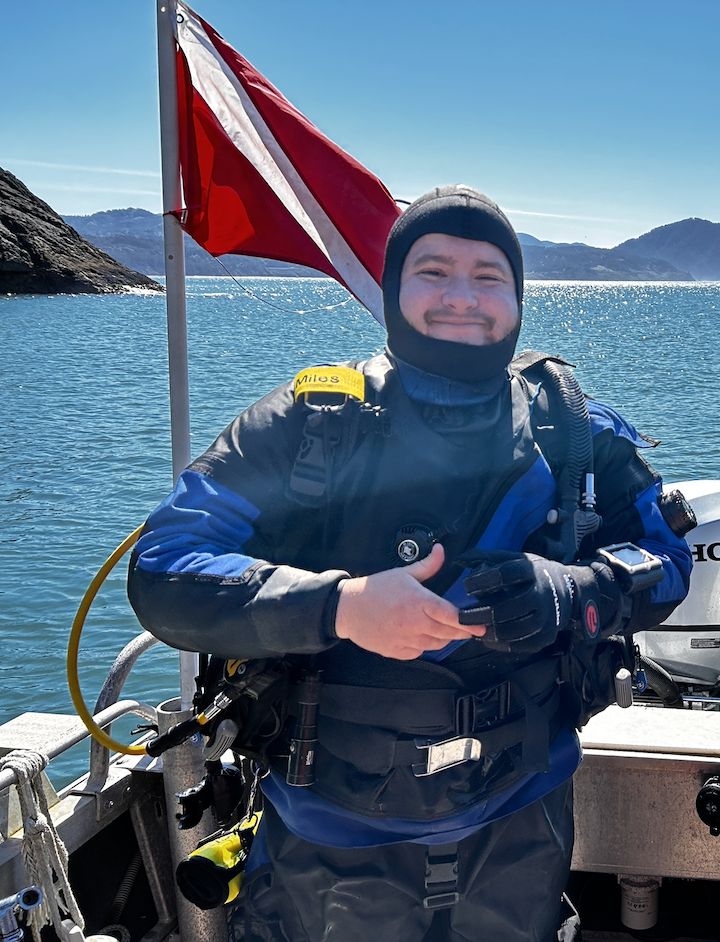
Miles Rough
Miles Rough is a Ph.D. student at the Oregon Institute of Marine Biology in the laboratory of Dr. Aaron Galloway. Miles is fascinated by kelp forest dynamics, particularly the shifts between healthy ecosystems and urchin-dominated barrens. He uses field and laboratory experiments to understand the role of sunflower sea stars as a key predator influencing urchin populations and ecosystem stability. Miles is an AAUS scientific diver and SCUBA instructor, using diving both to conduct research and to train others in underwater observation techniques. He earned his B.S. in Biology with a focus on Marine Biology from Oregon State University in 2024.