
Take Action
Action Alert: Urge State Parks to Protect Birds and Other Wildlife by Restricting Drone Use
Oregon Parks and Recreation Department (OPRD) is accepting public feedback on proposed rules that will allow them to regulate drone take-offs and landings within State Parks and along the ocean shore. Please lend your voice and urge OPRD to strengthen these rules to help best protect nesting birds, marine mammals, and other wildlife from drone disturbances.

Nesting Brandt’s Cormorant with Common Murres, photo by Ruth Shelly
Each spring and summer, Oregon’s coastal state parks transform into vital nesting grounds for shorebirds and other sensitive wildlife. From April through September, species such as the Snowy Plover, Osprey, and Common Murre raise their young in fragile dune and cliffside habitats. Unfortunately, the rising popularity of recreational drones poses a serious threat to these birds. Even when flown responsibly, drones can resemble predators, triggering panic, nest abandonment, or even injury as birds flee to protect their chicks.
Wildlife experts and park rangers have documented an increase in drone-related disturbances in recent years. A single flyover can cause entire colonies to scatter, leaving eggs and hatchlings vulnerable to predators and temperature changes. These incidents threaten decades of conservation work aimed at restoring Oregon’s native bird populations. Beyond their impact on wildlife, drones also disrupt the serene natural experience visitors seek in these parks, shattering the quiet with buzzing noise and intrusive movement.
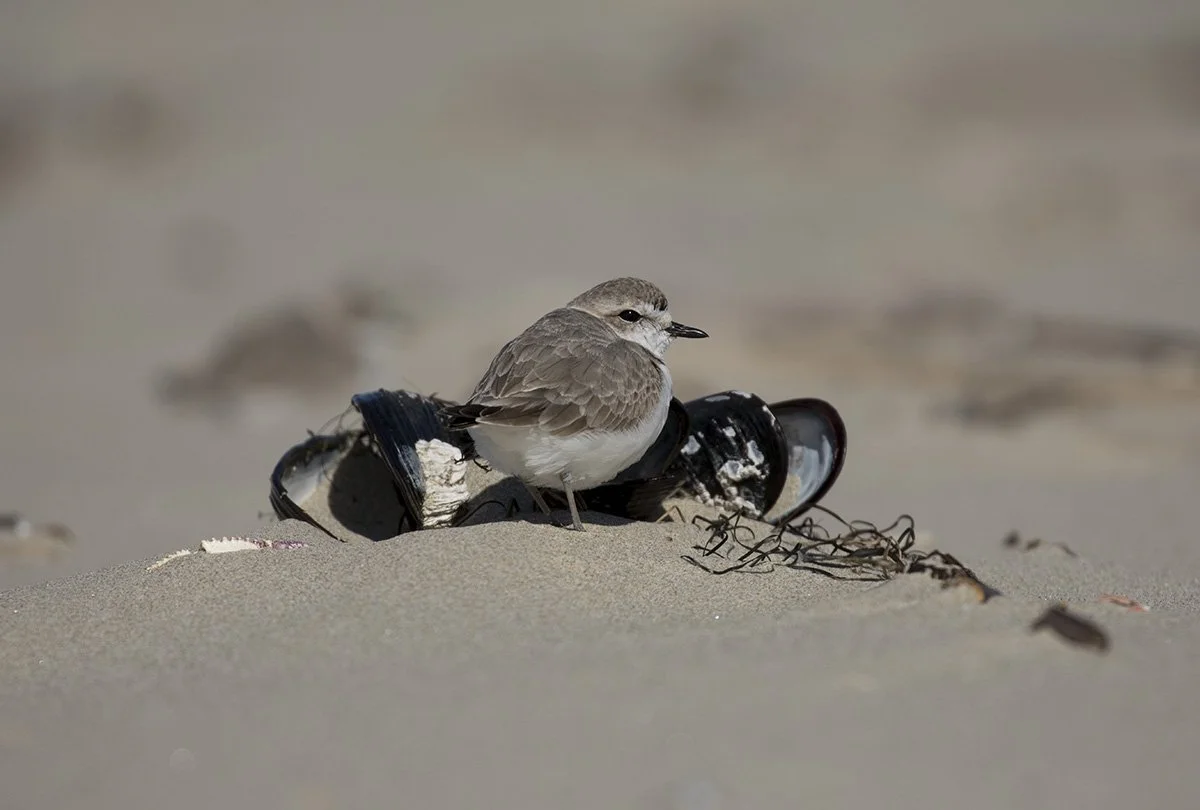
Snowy Plover by Roy Lowe
By banning drones during nesting season in sensitive areas, Oregon can strike a balance between recreation and preservation. Visitors can still enjoy breathtaking views, photography, and exploration—just without the risk to the animals that depend on these protected shores. Grounding drones from April through September within sensitive areas ensures that the coast remains both a sanctuary for wildlife and a peaceful haven for people who come to reconnect with nature.
In 2021, the Oregon legislature directed OPRD to develop rules for drones. The agency pulled together a workgroup (including Bird Alliance of Oregon) to develop criteria where drone use should be prohibited (red zones), allowed conditionally (yellow zones), and allowed all the time (green zones). OPRD has developed draft rules to guide how they will regulate drone use on their lands. You can learn more about OPRD’s drone process here.
TAKE ACTION
Your comments on the proposed rule changes are needed. Comments will be accepted now until 5 p.m. on February 15, 2026, and can be submitted (see talking points below):
Online: https://www.oregon.gov/oprd/PRP/Pages/PRP-Rule-2025-Drones-Take-off-and-Landing.aspx
Postal Mail: Oregon Parks and Recreation Department, Attn: Robert Ellison, 725 Summer St. NE, Suite C, Salem, OR 97301
Virtual hearing: OPRD will also host a virtual public meeting to take input on its new rules on January 20 at 5 p.m. Sign up here to make a comment.
Talking Points
Drones disturb nesting birds and wildlife as drones are perceived as predators. Nesting seabirds will leave a nest to fend off a drone, leaving the eggs or chicks vulnerable to real predators
Commend State Parks draft rules that specifically prohibit drone use in Snowy Plover management areas. The rules should prohibit drone use in all Rocky Habitat Management Areas, Marine Reserves, and Marine Protected Areas as well.
Recommend OPRD adopt no take-off and landing rules in a 0.5-mile buffer in OPRD-managed land adjacent to all U.S. Fish and Wildlife Service refuge and other federally designated lands to protect wildlife populations and habitats.
Action Alert: Take Action on Oregon's Marine Reserves!
Representative David Gomberg (D-Lincoln City) has just introduced House Bill 2903 which requires Oregon’s Department of Fish and Wildlife, Fish and Wildlife Commission, and Department of State Lands to develop an adaptive management and social monitoring program to support Oregon’s five marine reserves.
Senators Dick Anderson (R-Lincoln City), David Brock Smith (R-Port Orford), and Suzanne Weber (R-Tillamook) are co-sponsors of the bill.
Why is HB 2903 so important?
In 2012, Oregon completed the planning and designation of five marine reserves: Cape Falcon, Cascade Head, Otter Rock, Cape Perpetua and Redfish Rocks. A review of the first ten years of Oregon’s Marine Reserve system reveals that the reserves:
Garner broad support from Oregonians – 90% of valley residents and 70% of coastal residents would vote to continue the marine reserves
Provide opportunities to research topics Oregonians care about – changing ocean conditions and hazards, ocean acidification and hypoxia, endangered species, and sea-star wasting syndrome
Pump more than $750,000 into coastal communities via marine reserve researchers contracting local commercial and charter fishing vessels
Promotes extensive community engagement – almost 13,000 individuals have engaged in community science initiatives
Please help us express our thanks by emailing or calling them.
How to contact our state legislators
Thank you!

Cascade Head Marine Reserve: courtesy of Oregon Dept. of Fish and Wildlife